Tallow vs ghee: which fat for which job?
Both are stable, both are traditional, both have a place. Here's how we use each — and when to reach for one over the other.
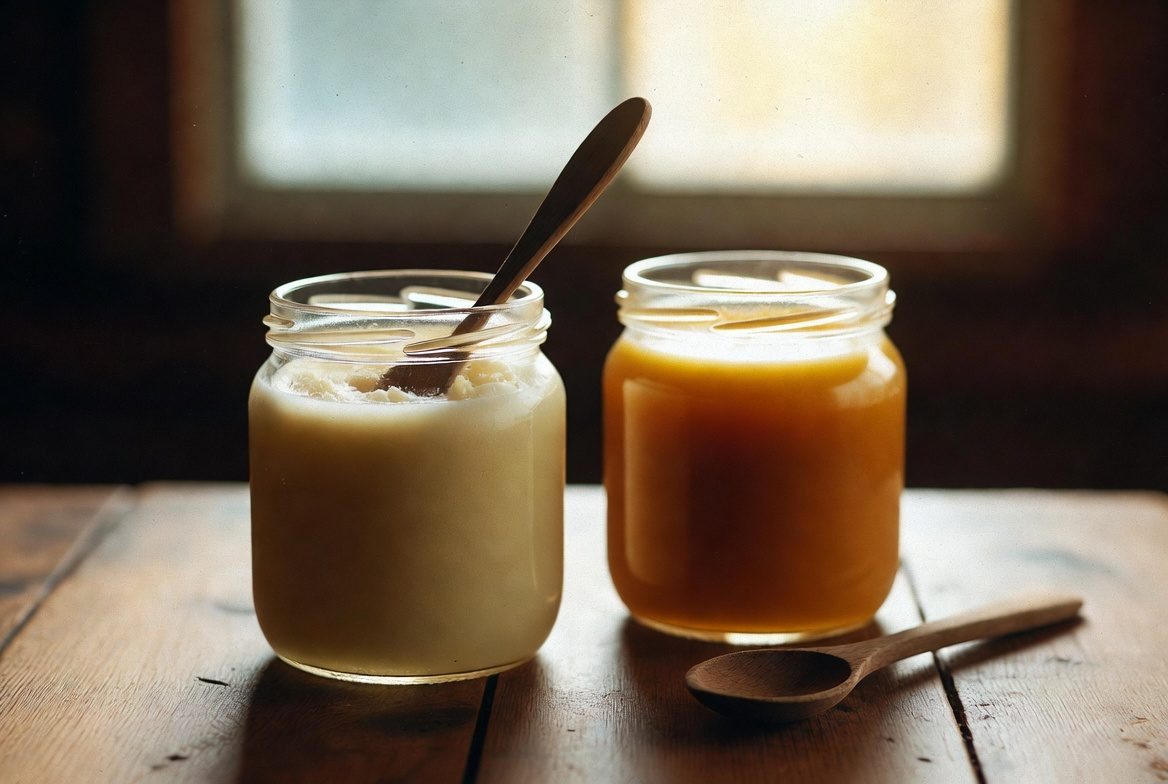
If you've moved away from seed oils and back toward traditional cooking fats, you've probably landed on two names: tallow and ghee. Both are rendered animal fats, both are shelf-stable, and both have been used for centuries. So which one do you actually reach for?
What they are
Tallow is rendered beef (or sometimes lamb) fat. The raw suet is cut from around the kidneys and loins, then slowly melted and strained until you're left with a clean, firm fat that's solid at room temperature.
Ghee is clarified butter — butter that's been simmered until the water evaporates and the milk solids separate, brown, and get strained out. What's left is pure butterfat with a slightly nutty flavour.
Smoke point
This is where people start. Tallow sits around 250°C, ghee around 230–250°C depending on how well it's clarified. In practice, both are excellent for high-heat cooking — roasting, searing, deep frying. You won't notice a meaningful difference at the temperatures most home kitchens reach.
Flavour
Here's where they diverge. Ghee has a distinct buttery, slightly caramelised flavour from those browned milk solids. It's beautiful in Indian cooking, with spiced vegetables, or on sourdough.
Properly rendered tallow is much more neutral — especially if it's been washed or double-rendered. It lets the food speak. We use it for roast potatoes, chips, Yorkshire puddings, and anything where we want the ingredient to be the star, not the fat.
Nutrition
Both are rich in fat-soluble vitamins (A, D, E, K) — especially when the animals are grass-fed. Tallow is higher in stearic acid, a saturated fat that research suggests is metabolically neutral (it doesn't raise LDL the way some other saturated fats can). Ghee is higher in butyric acid, which is linked to gut health.
Neither is "better." They're both real food, doing different jobs.
Skincare
Tallow has a long history as a skin balm — its fatty acid profile is remarkably close to human sebum, which is why it absorbs so well. Ghee doesn't have the same tradition in Western skincare, though it's used in Ayurvedic practice.
If you're looking for a fat to put on your skin, tallow wins this round.
So which one?
Use tallow for:
- Roasting and frying (especially chips and roast potatoes)
- High-heat searing where you want a neutral base
- Skincare and balms
- Seasoning cast iron
Use ghee for:
- Curries and spiced dishes
- Anything where you want that buttery depth
- Baking where butter flavour matters
- Spreading on toast or naan
Or do what we do: keep both in the kitchen. They're not rivals — they're teammates.