Tallow for skin: the sebum connection
Tallow's fatty acid profile is more similar to human sebum than any plant oil. Here's the biochemistry behind an ancient skincare ingredient.
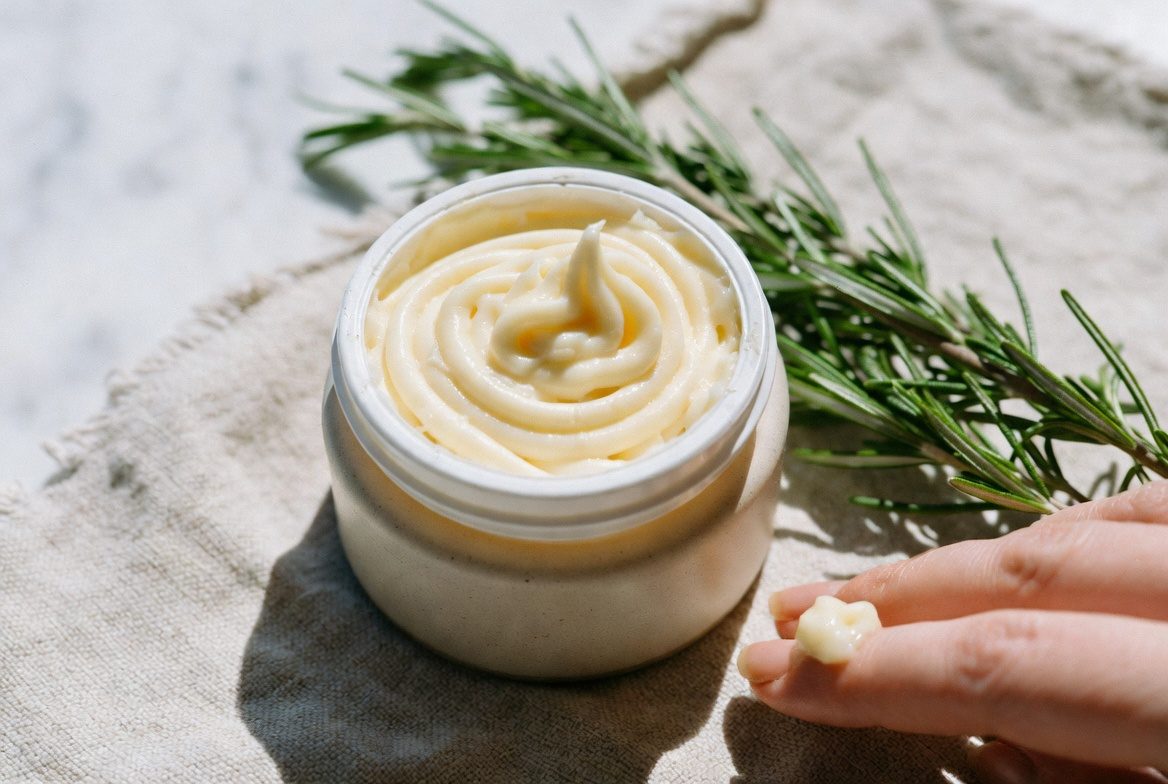
The use of tallow on skin is not new. It predates every skincare brand, every serum, and every moisturiser on the market. But there's a reason it works — and it comes down to biochemistry.
What is sebum?
Sebum is the oily substance produced by your sebaceous glands. It coats the skin's surface, forming a protective barrier that prevents moisture loss, shields against environmental damage, and maintains skin flexibility. When your skin feels naturally moisturised, that's sebum doing its job.
Sebum is composed primarily of:
- Triglycerides and fatty acids (~57%)
- Wax esters (~26%)
- Squalene (~12%)
- Cholesterol esters (~5%)
The fatty acid component is dominated by oleic acid, palmitic acid, and stearic acid — the same three fatty acids that dominate beef tallow.
The compositional match
According to analysis published in the Journal of the American Oil Chemists' Society (2017), beef tallow shares approximately 55% of its fatty acid profile with human sebum. For comparison:
| Fat/Oil | Fatty acid similarity to sebum |
|---|---|
| Beef tallow | ~55% |
| Shea butter | ~40% |
| Olive oil | ~35% |
| Coconut oil | ~23% |
The word "tallow" itself derives from a Latin root meaning "sebum" — our ancestors understood the connection long before anyone could measure it.
Why similarity matters
Skin absorbs fats that resemble its own oils more readily than fats with very different profiles. Tallow's high concentration of:
- Oleic acid (~42%) — an emollient that softens skin by filling gaps between cells in the outer layer
- Palmitic acid (~25%) — forms an occlusive layer that retains moisture and supports the skin barrier
- Stearic acid (~25%) — acts as an emollient and skin conditioner, helps maintain the skin's structure
These are not exotic ingredients. They are the same fatty acids your skin produces naturally.
What about plant oils?
Many plant oils are excellent for skin. But their fatty acid profiles are quite different from sebum:
- Coconut oil is dominated by lauric acid (a medium-chain fat not found in significant quantities in sebum) and can feel occlusive without truly moisturising
- Sunflower oil is high in linoleic acid, which can be beneficial for some skin types but is more prone to oxidation
- Olive oil is closer to sebum than most plant oils (high in oleic acid) but lacks the palmitic and stearic acid balance
Tallow's advantage is not that it's "better" than all plant oils in all situations — it's that its overall profile is the closest match to what your skin already makes.
The brand promise
This is where our core belief comes in: if you wouldn't eat the ingredients, you shouldn't absorb them through your skin. Your skin is not an impermeable barrier — it absorbs what you put on it. Tallow is a single ingredient, food-grade, and biocompatible with human skin.
A note on the evidence
We want to be straightforward: there are no large-scale, peer-reviewed clinical trials specifically studying topical beef tallow application on human skin. The evidence base is biochemical and compositional — the similarity between tallow and sebum is measurable and documented, and the individual fatty acids have well-studied effects on skin.
The anecdotal evidence — from centuries of traditional use to the growing community of people using tallow balms today — is consistent with what the biochemistry predicts. But we'll let the science mature rather than overclaim.
References: J Am Oil Chem Soc (2017) fatty acid profile comparison; Pappas A (2009) Dermato-Endocrinology; Stewart ME & Downing DT (1991) Adv Lipid Res.