How to render tallow at home, properly
Low and slow, the way we do it on the farm. A no-shortcut guide to clean, neutral fat from suet.
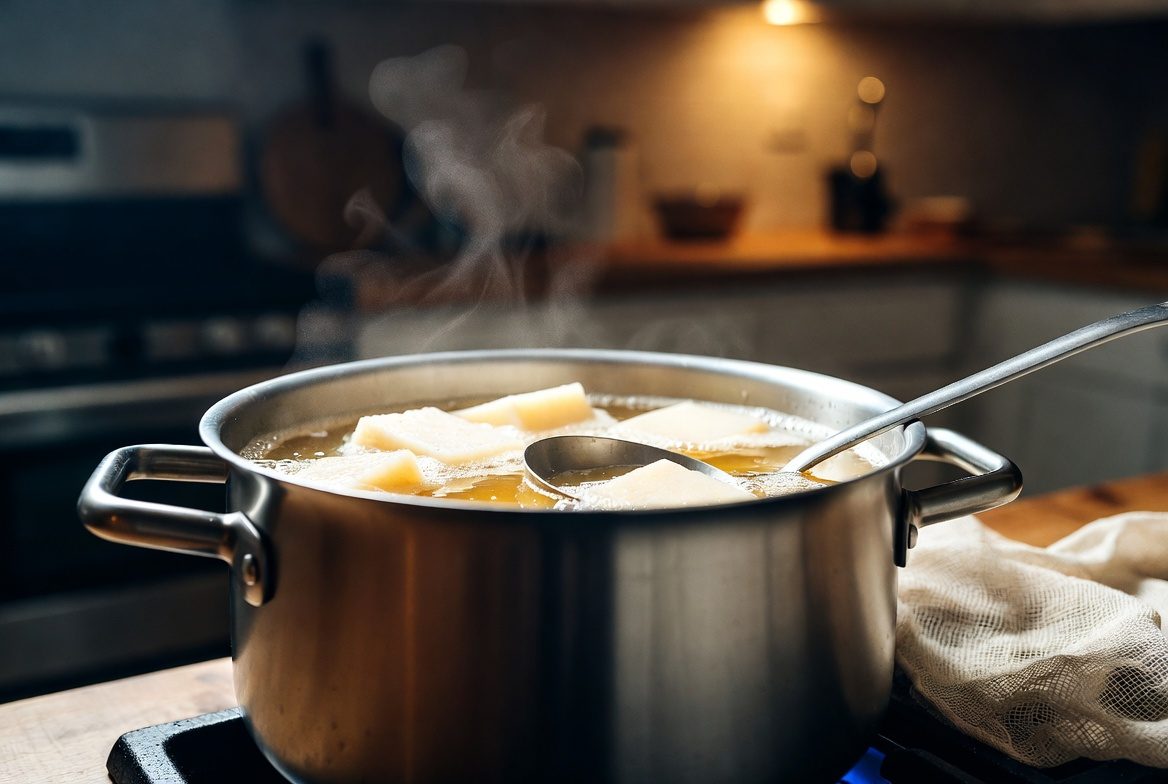
Rendering tallow is not complicated. It's one of the oldest kitchen skills there is — our great-grandparents did it without thinking. But like most simple things, the details matter. Here's how we do it on the farm, scaled down for a home kitchen.
What you need
- Beef suet — the hard fat from around the kidneys and loins. Ask your butcher for it; most will have it or can get it. Grass-fed if you can. Aim for 1–2 kg to make it worth your time.
- A heavy pot — a Dutch oven or large saucepan. Nothing fancy.
- A fine mesh strainer and cheesecloth (or a clean tea towel).
- Jars with lids for storing.
- Time. This isn't quick. Budget 3–4 hours.
Step 1: Prepare the suet
Trim off any meat or blood spots. You want as close to pure white fat as possible — any meat left on will give the finished tallow a beefy smell.
Cut it small. This is the most important step and the one most people rush. The smaller you cut the suet, the more evenly it renders and the cleaner your tallow will be. We hand-cut ours in the farm shop to roughly 1–2 cm cubes. A sharp knife and a cold chopping board help — the fat firms up when it's cold, making it easier to cut cleanly.
You can also grate frozen suet on a box grater. It's faster but messier.
Step 2: Start the render
Put the cut suet into your pot over the lowest heat your hob can manage. Add a splash of water — about 50ml per kilo. This stops the fat from scorching before it starts to melt and will evaporate off completely.
Don't be tempted to turn the heat up. Low and slow is the entire point. The fat should melt gently, not fry. If you hear sizzling, turn it down.
Step 3: Wait
Stir occasionally — every 20 minutes or so. The suet will slowly melt into liquid fat, and the connective tissue will shrink into small, crispy pieces (these are called cracklings — save them, they're delicious with salt).
This takes 2–4 hours depending on quantity and how finely you cut the suet. You're done when:
- The liquid is clear and golden
- The cracklings have sunk to the bottom and turned light brown
- There's no more white, unrendered fat visible
Step 4: Strain
Line your strainer with cheesecloth and set it over a heatproof bowl or jug. Pour the hot tallow through slowly. Don't press the cracklings — let gravity do the work. Pressing pushes through particles that make the tallow cloudy and reduce its shelf life.
For an even cleaner result, strain a second time through fresh cheesecloth once it's cooled slightly but still pourable.
Step 5: Store
Pour the strained tallow into clean, dry jars. Leave the lids off until it's cooled to room temperature — condensation under a sealed lid introduces moisture, which is the enemy of shelf life.
Once solid, seal the jars.
Shelf life:
- Countertop: 1–2 months in a cool kitchen
- Fridge: 6–12 months
- Freezer: Indefinitely, for practical purposes
Well-rendered tallow should be firm, pale gold to ivory when solid, and have almost no smell. If it smells strongly of beef, either the heat was too high or there was too much meat left on the suet.
Double rendering (optional)
If your first render came out a bit dark or beefy, you can clean it up. Melt the tallow again with an equal volume of water, stir well, and let the whole thing cool and solidify in the fridge. The tallow will form a clean disc on top; the water underneath will have pulled out impurities. Lift the disc off, scrape any residue from the bottom, and you've got a much cleaner product.
This is essentially what "washed tallow" means — and it's what we sell for skincare use.
Tips from the farm
- Cold fat cuts better. Put the suet in the fridge (or freezer for 30 minutes) before cutting.
- Don't rush it. Every batch we've ruined was because someone turned the heat up.
- Save the cracklings. Tossed with flaky salt, they're a proper snack.
- Label your jars. Date them, and note whether it's a first or second render.
That's it. No special equipment, no secret technique. Just time, patience, and good fat.