Fat-soluble vitamins: what grass-fed tallow carries that seed oils don't
Vitamins A, D, E, and K2 are present in grass-fed animal fats and largely absent from seed oils. Here's why that matters — and why the fat matrix is part of the story.
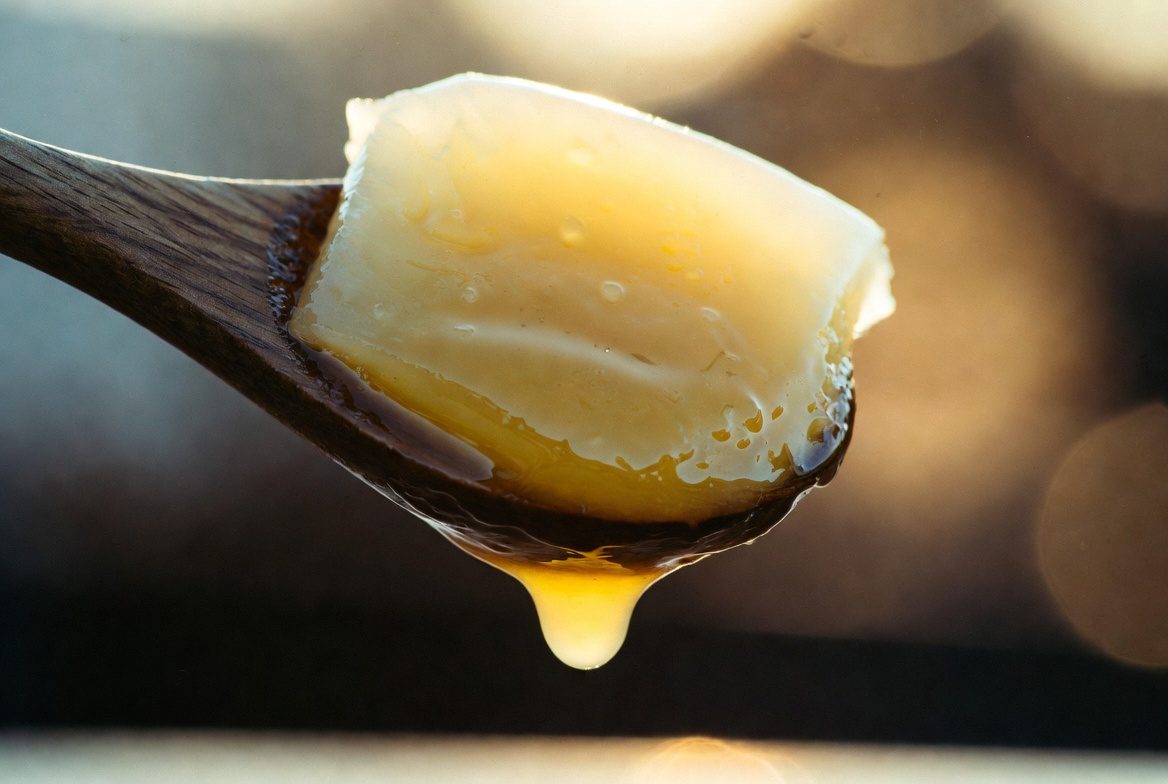
There are four fat-soluble vitamins: A, D, E, and K. They require dietary fat to be absorbed, they're stored in body fat and the liver, and they play essential roles in immune function, bone health, cardiovascular health, and more.
Grass-fed animal fats contain all four. Refined seed oils contain, at best, traces of one.
The vitamins
Vitamin A (retinol)
Grass-fed tallow contains retinol — the pre-formed, bioavailable version of vitamin A. This is distinct from beta-carotene (found in carrots and sweet potatoes), which the body must convert to retinol with variable efficiency.
Retinol is essential for immune function, vision, skin health, and cellular repair. It is found exclusively in animal foods — liver, egg yolks, butter, and animal fats from pasture-raised animals.
Seed oils contain no vitamin A.
Vitamin D3
Cattle that live outdoors on pasture synthesise vitamin D3 through sun exposure, just as humans do. This vitamin D is stored in their fat tissue. Grass-fed tallow contains meaningful amounts of D3 — a vitamin that a significant portion of the UK and northern European population is deficient in.
Seed oils contain no vitamin D.
Vitamin E
Both tallow and some seed oils contain vitamin E (tocopherols). Seed oils — particularly sunflower and wheat germ oil — are often cited as vitamin E sources. However, the high PUFA content of seed oils actually increases the body's requirement for vitamin E, because vitamin E is consumed as an antioxidant protecting those fragile polyunsaturated fats from oxidation.
In tallow, the low PUFA content means less vitamin E is used up in antioxidant defence, making the vitamin E that is present more functionally available.
Vitamin K2 (menaquinone)
This may be the most significant difference. Vitamin K2 — specifically the MK-4 form — is produced when grazing animals convert vitamin K1 from grass into K2, which is stored in their tissues and fat.
K2 plays a documented role in calcium metabolism: it activates proteins that direct calcium into bones and teeth and away from soft tissues like arterial walls. The Rotterdam Study found that dietary menaquinone intake was associated with reduced risk of coronary heart disease (Geleijnse et al., 2004, Journal of Nutrition).
Grain-fed animals produce significantly less K2. And seed oils? They contain none.
The fat matrix matters
Fat-soluble vitamins are called that because they dissolve in — and are absorbed through — dietary fat. Taking a vitamin D supplement with a fat-free meal reduces its absorption substantially.
When vitamins A, D, E, and K2 are naturally present in a fat like tallow, they are delivered in exactly the form the body is designed to absorb them — dissolved in their native fat matrix. This is not a supplement; it's how these nutrients have been consumed for the entirety of human evolution.
A note on quantities
We want to be precise: tallow is not a vitamin supplement. The quantities of fat-soluble vitamins per tablespoon are modest — not enough to treat a clinical deficiency on their own. The value is in regular, daily use as part of a whole-food diet. When tallow is your everyday cooking fat, those small amounts add up — and they come in a form your body handles naturally.
The contrast with seed oils is straightforward: refined seed oils have been stripped of virtually all micronutrients during processing. They deliver calories and fatty acids, but nothing else.
References: Geleijnse JM et al. (2004) J Nutr; Halder M et al. (2014) Meat Sci; Vermeer C (2012) J Thromb Haemost.